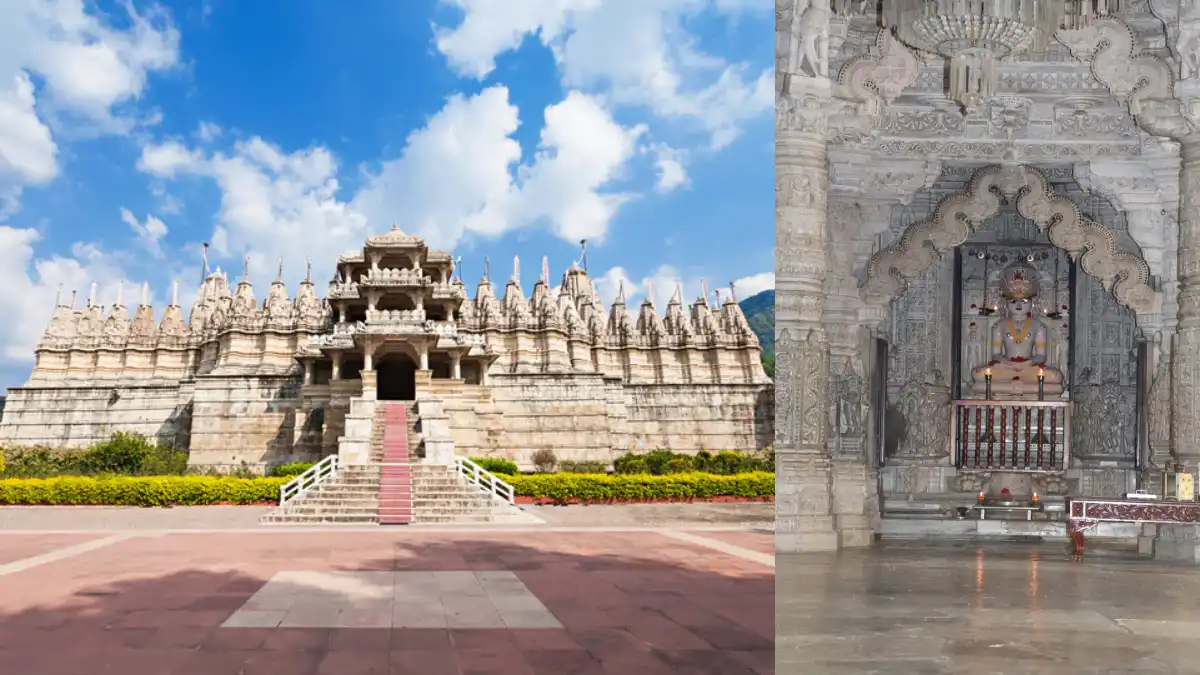
Tucked into a quiet valley of the Aravalli hills between Udaipur and Jodhpur, the Ranakpur Jain Temple is one of India’s most celebrated pieces of religious architecture — and one of the five most important pilgrimage sites in Jainism. Dedicated to Lord Adinath, the first Jain Tirthankara, the temple is instantly recognisable for its 1,444 intricately carved white marble pillars, no two of which are exactly alike.
Whether you’re visiting for pilgrimage, architecture, or simply as a stop between Udaipur and Jodhpur, this guide covers everything you need: history, timings, how to reach, temple etiquette, and the adventure activities you can pair with your visit nearby.
History and Architecture
Construction of the temple began in 1437 CE during the reign of the Mewar ruler Rana Kumbha, after a local Jain merchant named Dhanna Shah reportedly saw a divine vision of Lord Adinath and resolved to build a grand shrine in his honour. Rana Kumbha granted land in the area — then known as Daranaka — and construction stretched across several decades under the guidance of an architect commonly credited as Deepak.
Built in the ornate Maru-Gurjara style, the main temple is a Chaumukha (four-faced) shrine spread across roughly 48,000 square feet, with 29 halls and 80 domed ceilings supported by 1,444 uniquely carved pillars. The main assembly hall houses two massive bells, each weighing around 108 kg, whose sound is said to echo through the entire complex. Within the wider complex, don’t miss the nearby Parshvanath Temple, known for its finely engraved marble windows, and the smaller shrine to Amba Mata a short walk away.
The temple suffered some damage during historical conflicts and was restored by Jain traders in the 1800s. Today it’s maintained by the Anandji Kalyanji Trust, which manages daily rituals and the flow of thousands of visitors — including significantly larger crowds during major Jain festivals like Mahavir Jayanti.
Temple Timings
| Visitor Type | Temple Timings |
| Jain devotees (worship) | 6:00 AM – 8:00 PM |
| Tourists / non-Jain visitors | 12:00 PM – 5:00 PM |
Only practising Jains are permitted to enter and worship inside the inner sanctum; other visitors are welcome to observe rituals and explore the wider complex, but should plan their visit for the afternoon tourist window. Photography is generally allowed in the complex for a small additional charge, though rules can vary, so it’s worth confirming at the entrance.
How to Reach Ranakpur Jain Temple
By Air
The nearest airport is Maharana Pratap Airport in Udaipur, about 90 km away, connected to major cities including Delhi and Mumbai. From the airport, a taxi takes roughly 2 hours to reach the temple.
By Train
Falna Railway Station is the closest, around 35–38 km away. Many travellers instead take a train to Udaipur, which offers far more connections, and continue by road from there.
By Road
- From Udaipur: approximately 90 km (about 2 hours)
- From Jodhpur: approximately 160 km (about 3 hours)
Regular express buses run from Udaipur, and the drive itself — through the forested Aravalli valley — is considered one of the more scenic short trips in the region. Many visitors combine Ranakpur with a same-day visit to Kumbhalgarh Fort, about 30 km away.
Best Time to Visit
October to March is the ideal window, when Rajasthan’s weather is cool and comfortable, and the white marble is especially striking in the soft morning light. Summers (April–June) can be extremely hot in this region, so an early visit is recommended if you’re travelling in that period.
Most visitors spend 2–3 hours exploring the complex, which is enough time to take in the main sanctum, the surrounding shrines, and the carvings without rushing.
Temple Etiquette and Dress Code
- Dress modestly — shoulders and knees should be covered
- Leather items (belts, wallets, shoes, bags) are not permitted inside the temple complex
- Only practising Jains may enter the inner sanctum to worship; others may observe from the surrounding halls
- Maintain silence and decorum, as this remains an active place of worship
- A local guide is genuinely useful here — the sheer scale of carving makes it easy to miss details without one
Nearby Adventures to Pair With Your Visit
Ranakpur sits in one of Rajasthan’s most scenic pockets of the Aravalli range, and several adventure activities are within easy reach if you’d like to extend your day beyond the temple itself.
Kumbhalgarh Zip-Lining
About 30 km from Ranakpur, Kumbhalgarh Fort is home to an adventure park offering one of Rajasthan’s longer zip-line circuits, stretching over a kilometre across the valley with views of the fort’s massive walls — the second-longest continuous wall structure in the world after the Great Wall of China.
Rock-Climbing and Rappelling at Kumbhalgarh
The same adventure park offers guided rock-climbing and rappelling on natural rock faces, along with a multi-hurdle rope course — suitable for beginners under instructor supervision.
Kumbhalgarh–Ranakpur Trekking Trail
A well-known moderate-difficulty trekking route connects Kumbhalgarh Fort to Ranakpur through forested hills, typically covering several kilometres over 4–5 hours. It’s a popular way to experience the Aravalli landscape on foot, and is best attempted between October and March.
Kumbhalgarh Wildlife Sanctuary
Surrounding the fort, this sanctuary is known for leopards, wolves, and a variety of birdlife, and can be explored by jeep safari for travellers who want a wildlife component alongside the temple visit and fort tour.
Jawai Bandh — Leopard Safari
About 50–55 km from Ranakpur (roughly 50–55 minutes by road), Jawai Bandh is one of Rajasthan’s most distinctive wildlife destinations — a landscape of granite hills and boulder caves where leopards live in close, peaceful proximity to local Rabari shepherd communities. It’s a genuinely different kind of adventure from the fort-based activities around Kumbhalgarh, and pairs naturally with a Ranakpur visit if you have an extra day. You can plan a Jawai Leopard Safari to add a sunrise or sunset leopard-tracking drive to your Rajasthan itinerary.
Sadri and Desuri Temple Circuit
For a quieter, more offbeat extension, the nearby towns of Sadri (about 8 km away) and Desuri (about 16 km away) are home to several smaller, historic temples worth a short detour if you have extra time.
Also Read: Sanwariya Seth Temple Visiting Guide
Frequently Asked Questions
1. What are the Ranakpur Jain Temple timings for tourists?
Tourists and non-Jain visitors are permitted between 12:00 PM and 5:00 PM. Jain devotees can enter for worship from 6:00 AM to 8:00 PM.
2. How far is Ranakpur Jain Temple from Udaipur?
It’s approximately 90 km from Udaipur, roughly a 2-hour drive by road.
3. Is there an entry fee?
Entry to the temple itself is free, though cameras and mobile phones typically require a small additional charge, and rules can vary — it’s worth checking at the entrance.
4. Is there a dress code?
Yes. Visitors should dress modestly, covering shoulders and knees, and leather items such as belts, wallets, and shoes are not allowed inside the complex.
5. What adventure activities can I combine with a Ranakpur visit?
Kumbhalgarh, about 30 km away, offers zip-lining, rock-climbing, rappelling, a rope course, and a wildlife sanctuary jeep safari. Jawai Bandh, about 50–55 km away, offers a completely different wildlife experience centred on leopard safaris.
6. Can I visit Jawai Bandh from Ranakpur?
Yes — Jawai Bandh is roughly 50–55 km from Ranakpur, about an hour’s drive, making it an easy addition to a Ranakpur day trip or a full extra day on your itinerary.
7. How much time should I plan for the temple visit?
Most visitors spend 2–3 hours exploring the main temple and surrounding shrines, without including nearby side trips.
About this guide
This guide was compiled from publicly available temple information and regional travel resources to help visitors plan a well-informed trip to Ranakpur. Timings and access rules can change around major festivals, so please reconfirm locally before travelling.